In this article, we’ll dive into the details of IPTV and MATV, explore how they work, and discuss their applications in various settings, along with their integration into other advanced technologies like Wireless Solutions, CCTV IP Video Surveillance, and Parking Management Systems.
What is IPTV (Internet Protocol Television)?
IPTV, or Internet Protocol Television, is a system where television services are delivered using the Internet Protocol (IP) rather than traditional broadcast formats like cable or satellite. IPTV allows for content to be streamed over a broadband connection, offering a much more flexible and interactive experience compared to traditional TV.
How Does IPTV Work?
IPTV works by converting television content into data packets, which are then transmitted over an IP network (such as the internet) to the user’s device. This allows for on-demand streaming, live broadcasts, and even interactive services such as video on demand (VOD) and catch-up TV.
IPTV uses a client-server model where the content is hosted on a central server and streamed to various client devices (such as smart TVs, set-top boxes, or smartphones). This model provides benefits like:
- On-demand content: Watch what you want, when you want.
- Higher quality: IPTV can support high-definition content and multi-view services.
- Interactivity: Features such as DVR, pause, rewind, and fast-forward during live programs.
Some IPTV services also offer voice-over IP (VoIP) and IP Phone PBX integration for making phone calls over the same internet connection, which enhances the overall communication experience.
What is MATV (Master Antenna Television)?
MATV, or Master Antenna Television, is a system designed for distributing terrestrial television signals to multiple receivers from a single antenna. Unlike IPTV, MATV doesn’t rely on an internet connection for broadcasting; it uses a central antenna or satellite dish to collect the signal, which is then transmitted through coaxial cables to different televisions within a building or facility.
How Does MATV Work?
MATV uses a centralized antenna to capture TV signals (either digital or analog) and distribute them across the premises. The signals are processed and amplified to ensure a strong reception at each TV within the building. Typically, MATV systems are used in multi-story buildings, hotels, hospitals, or large residential complexes where a shared antenna can serve multiple TV units.
Key features of MATV include:
- Centralized control: One antenna handles signal reception and distribution to multiple televisions.
- No need for individual subscriptions: As the signal is distributed via a centralized system, there is no need for each TV to have its own cable subscription.
- Ease of installation: MATV systems are relatively easy to set up in existing buildings, especially when compared to more complex IPTV installations.
MATV is typically used for over-the-air broadcast signals and satellite feeds, meaning it doesn’t support the interactivity or on-demand features available with IPTV. However, it is still widely used in certain environments like nursing homes or hotel systems, where guests or residents need simple access to a set range of channels.
Differences Between IPTV and MATV
Now that we understand what IPTV and MATV are, let’s compare the two systems to better understand their distinctions:
|
Feature |
IPTV |
MATV |
| Signal Delivery | Internet Protocol (IP) over broadband | Terrestrial or satellite signals via antennas |
| Content Type | Live TV, VOD, Catch-Up TV, Interactive Services | Linear TV, no on-demand features |
| Equipment | Set-top boxes, smart TVs, broadband network | Central antenna, coaxial cable distribution |
| Interactivity | Supports DVR, pause, fast-forward, on-demand content | Limited to standard channel broadcasting |
| Scalability | Easily scalable, can support multiple locations | Best for smaller setups or larger buildings with shared antennas |
| Quality | Can deliver high-definition content | Dependent on signal quality and antenna placement |
Applications of IPTV and MATV
Both IPTV and MATV have distinct applications in various industries. Here’s how they integrate into different environments:
IPTV Applications:
- Residential Use: IPTV allows families to access a wide range of channels, movies, and on-demand services. Integration with IP Phone PBX or Voice Over IP (VoIP) systems also enables seamless communication between devices, all running over the same network.
- Business Use: IPTV can be used in hotels, offices, and hospitals for internal communication, training, and entertainment. Building Management Systems (BMS) often integrate IPTV to provide easy access to relevant news and updates across different areas of a building.
- Smart Home Integration: IPTV can be integrated with Internet of Things (IoT) devices for smart home setups, allowing users to control content with voice commands or via mobile apps.
MATV Applications:
- Commercial Installations: MATV is commonly found in commercial properties such as hotels and large office buildings, where a shared antenna setup can distribute television content to multiple rooms.
- Security and Surveillance Integration: CCTV IP Video Surveillance systems can be installed in conjunction with MATV to enhance security. For example, live video feeds from security cameras can be displayed on TV screens throughout a facility.
- Educational Institutions: MATV systems are often deployed in schools and universities where television broadcasts are used for educational purposes or announcements.
Integrating IPTV and MATV with Other Technologies
The evolution of IPTV and MATV technologies has paved the way for integration with various Wireless Solutions, Fire Alarm Systems, and Access Control Systems. Here are a few examples:
- Wireless Solutions: Both IPTV and MATV can be integrated into wireless networks, allowing users to access content from anywhere in the building or even outside the facility. Alshareef Group offers Wireless Solutions for ultimate mobility and convenience. Elevate your experience with top Solicitors Newry now!
- Fire Alarm Systems: IPTV systems can be used in fire alarm systems to display real-time emergency information or evacuation instructions across a building’s television network.
- Access Control System: IPTV can also be linked to access control systems, enabling centralized monitoring of access points while also providing entertainment or informational broadcasts.
- Master Clock Systems: In large buildings or factories, IPTV can be synchronized with Master Clock Systems to display accurate time across multiple screens in the building.
Conclusion
IPTV and MATV are both essential technologies that help deliver television content to users in different ways. While IPTV offers a modern, internet-based method that supports interactive features and high-quality streaming, MATV relies on centralized antenna systems to distribute traditional TV signals. Each system has its advantages and is suitable for various types of installations, depending on the specific needs of the user.
As technology continues to evolve, both IPTV and MATV can be seamlessly integrated with other systems such as CCTV IP Video Surveillance, Building Management Systems, and Wireless Solutions to create more efficient, secure, and user-friendly environments.
By understanding the differences and applications of IPTV and MATV, you can make an informed decision about which system is best suited to your needs.
The post What Are IPTV and MATV, and How Do They Work? first appeared on Abdul Rahman Al Shareef Group.
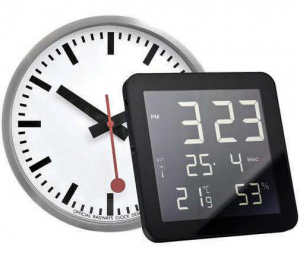
]]>No more wondering which clock has the right time These clocks are synchronized to national and international time standards using a reliable, secure and manageable time server as the system’s master clock. Official time from the time server is broadcast to the clocks by a wireless transmitter. The clocks both receive and transmit the time resulting in a robust and accurate mesh network. Adjustment for DST is automatic and fully configurable.
Synchronize display clocks to computer networks, voice and video systems, telephony, security systems, building automation, access control, fire alarms, electronic record systems, etc. Official time from GPS or dial-up service Wire-free, battery-powered analog (24/110VAC/ PoE also available) Each clock acts as a transmitter and a repeater for a robust wireless mesh network Proven frequency-hopping technology No license require Microprocessor-based clock with automatic calibration Built-in diagnostic mode for easy maintenance.
The post Master Clock System first appeared on Abdul Rahman Al Shareef Group.
]]>• Dramatically reduced parking space search time
• Less stress and frustration
• Instant guidance, by the shortest route, closest available space!
• Saves precious time—especially in airports
• A confident assurance of trouble-free- parking!
• Savings on fuel & tires
• Absolute comfort and convenience
• Less risk of damage to vehicles—easier manoeuvring
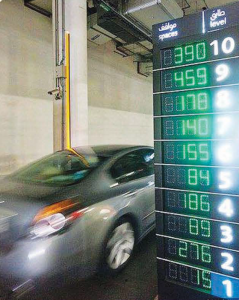
Parking guidance system
Parking guidance system
parking guidance system, which help drivers finding their park easily and give the management well control and accurate statistic data.
Guide the driver to free places using informative displays and
crossing detectors, in real-time.
• Full range of light indicators for all kind of facilities.
• Quick and easy equipment installation and adaptable to any
bracket without necessity of tools.
• “FUD” (fake ultrasonic detection) technology to assure maximum
accuracy
• Communication protocol TCP/IP – Modular – Flexible – Standalone
• “Quicker and Easier” vacant bay finder with green LED indicator
blinking option.
• Scada 3.0 – Multi remote site management software for configuration,
monitoring, statistics and reports with Internet connection.
• Displays with VMS characteristics
• RSS communication
• OPC server for BMS protocol communication
• Management of parking areas and single bay detection according
to occupation.
• Energy Saving system integrated.
• Integrated for Recharging Station for Electric Vehicles
The post Parking System first appeared on Abdul Rahman Al Shareef Group.
]]>A Building Management System (BMS) is a computer-based control system installed in buildings that controls and monitors the building’smechanical and electrical equipment such as ventilation, lighting, power systems, fire systems, and security systems. A BMS consists of software and hardware; the software program, usually configured in a hierarchical manner, can be proprietary, using such protocols as C-bus, Profibus, and so on, recently, however, new vendors are producing BMSs that integrate using Internet protocols and open standards such as DeviceNet, SOAP, XML, BACnet, LonWorks and Modbus.
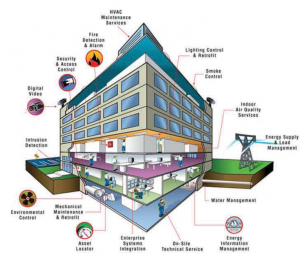
Our certified solutions have undergone multiple tests
• Comfort
optimize room and environmental conditions for building users
• Minimized risks
increase the security of building users and assets within the building
• Cost reduction
optimization measures help lower operating and energy costs and protect your investments
• Flexibility
We enable you to use your building flexibly, both today and in the future
The post BMS ( Building Management System) first appeared on Abdul Rahman Al Shareef Group.
]]>What is the Nurse Call System ?
a nursing communication and management system using IP technology that can be used for both wired and wireless connections. The features of this system make it ideal for use in hospitals, homes, supervised apartments and day centers.
How does ATICA MONITORING works ?
this mode calls made by patients from their rooms are answered at the control post by the healthcare team.
all calls made by patients require the presence of a member of the healthcare team in the patient’s room, If no member of the nursing staff goes to the patient’s room, the room post will continue to repeat the call, If there is no answer, a call will be forwarded to a higher level.

The post Nurse Call System first appeared on Abdul Rahman Al Shareef Group.
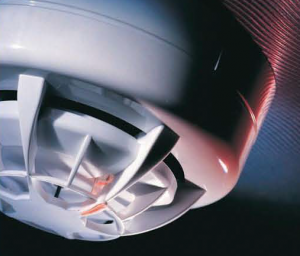
]]>Fire detection systems identify a developing fire at its early stages. Fire alarm systems alert the people within a building that there is a fire, giving them time to move to safety and seek assistance to limit the damage caused by the fire.
Installing a fire detection and alarm system within your premises will make sure that any fire incidents are identified at their very beginning,
minimizing the potential damage to your belongings and harm to your employees.
Al-Shareef has a variety of fire protection systems to suit the requirements of any factories , hospitals, universities commercial premises, including :
Addressable Fire Systems, also referred to as “intelligent” systems, which are the state of the art in alarm technology and are
able to monitor and control the capabilities of each individual alarm-initiating and signaling device.
Conventional Fire Systems, which have been the standard method for providing emergency signaling for many years. These systems are designed to alert by giving basic zonal and alarm calls and are highly suitable for small buildings.
Backed by some of the most prestigious brands in the industry, we carry a reputation for quality and reliability in protecting against fire hazards. We will help you choose the best solution to protect your business against fire.

The post Fire Detection and Alarm Systems first appeared on Abdul Rahman Al Shareef Group.
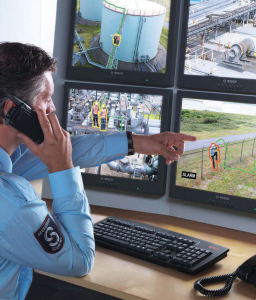
]]>Al-Shareef provides perimeter protection systems and security management tools provide accurate, immediate detection of perimeter disturbances across wide ranging sectors – government, military, utilities, corrections, industrial, transportation and
VIP protection – areas that by their intrinsic nature dictate high performance and unyielding reliability.

The post Intrusion Detection System first appeared on Abdul Rahman Al Shareef Group.
]]>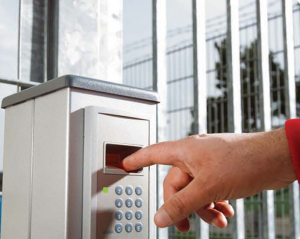
We offer you a comprehensive product portfolio for security solutions with state-of-the-art technology. Link your online access control components with the door components of the stand-alone access control system to give a virtual network which is simple, secure, and low-cost. Make use of the benefits of biometrics with regard to high security, additional comfort and simple handling. Our product range incorporates access control units, terminals, readers, components and communication solutions in different versions. They include mechanical and mechatronic locking systems, safety and automatic doors and personal interlocks. All products are compatible and can be intelligently combined with one another – in line with their intended solution.
The post Access Control System first appeared on Abdul Rahman Al Shareef Group.
]]>Al-Shareef AV over IP distribution solutions enable you to build on staff and consumer familiarity with TV and video to increase employee productivity, enhance customer experience and develop new revenue streams. It delivers TV and video using your existing building, campus, or wide-area IP network, without the need for a traditional, limited-reach analogue cabling system. Users can view all TV and video channels on existing TVs, video displays and personal computers.

• Get more from your existing network investment
• Serve a virtually unlimited number of users
• Up to HD quality everywhere
• Future-proof solutionThe IPTV solutions let you manage TV and video channels as just another service on your existing network, like email, internet access, or any business application. This makes your organization’s TV and video services more flexible, scalable, and cost-effective.
The post IPTV and (SMATV / MATV) first appeared on Abdul Rahman Al Shareef Group.
]]>Al-Shareef provides The IP Video Intercom System that increases the performance of video intercoms.
A complete system that is easy to install and versatile for every need. Ideal for newly-created systems or can be integrated into existing LAN systems.
The System offers advantages to every possible application scenario:
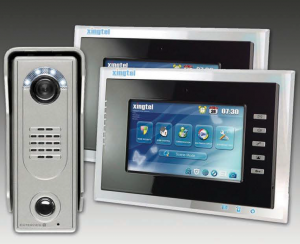
residential, corporate, commercial, logistical and institutional. It is able to serve an unlimited number of users, with simultaneous conversations without being limited to specific distances. Just one main distributor (dedicated or supported by the existing LAN networks) to which video intercom, intruder alarm, video surveillance, Home automation and access control systems are connected by an RJ45 plug A system that is also open to the world of the Internet, allowing for remote connection and diagnostics and other web services.
The post Video Door Entry System first appeared on Abdul Rahman Al Shareef Group.
]]>